One On-Call Engineer, Four Alarms, One Badge
Column: 04 · Multiple triggers
Jamie is asked to check service health on the hour, every hour, thirty seconds after startup, and whenever a business event arrives. Jamie brings four alarms to work. At 9:00 they all ring during a test, proving the service is healthy and the on-call engineer is not.
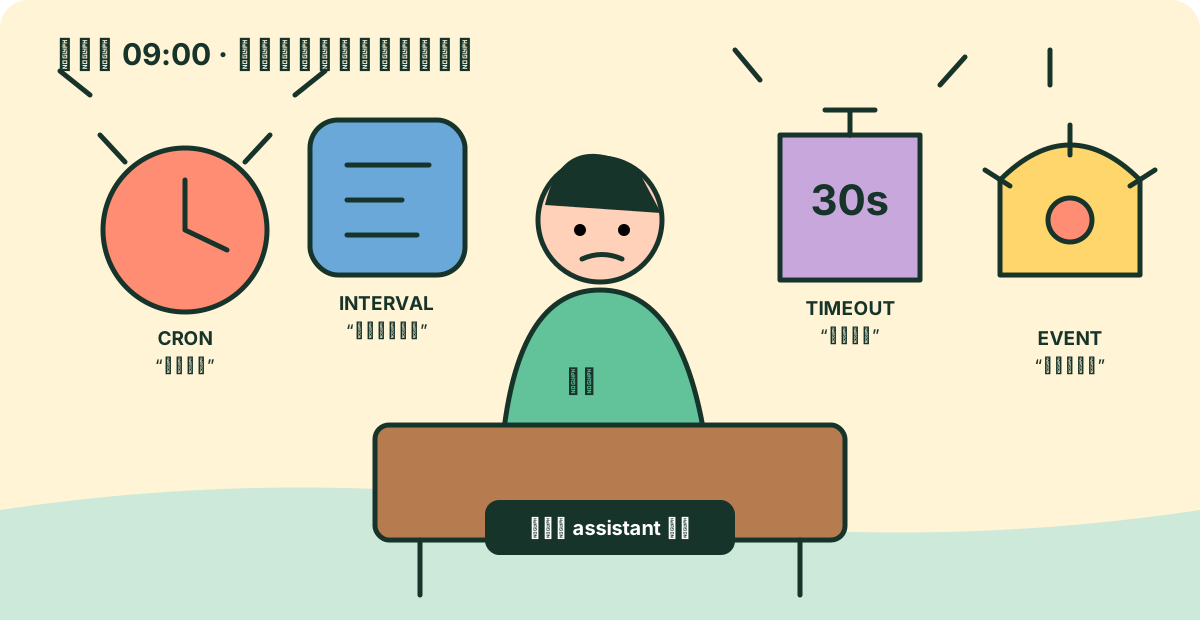
scheduled-agent keeps one assistant Agent and gives it four reasons to wake up:
cronfollows the calendar;intervalfollows elapsed time;timeoutwaits once after startup;eventreacts when something happens elsewhere.
cd agents/scheduled-agent
agent-compose config --quiet
agent-compose up
agent-compose scheduler ls assistant
agent-compose scheduler trigger assistant hourly-status
agent-compose scheduler trigger assistant external-event --payload '{"source":"manual-demo"}'
Cron uses the daemon’s timezone. When “9 a.m.” happens at 8 a.m., the Agent is usually innocent; the deployment timezone is not.
Declarative triggers are ideal when each alarm directly invokes one Agent. Use scheduler.script for state, routing, retries, or multiple calls. Use dynamic workflow when even the number of branches is unknown until runtime.
The scheduled-agent README has the exact trigger fields and cleanup commands.